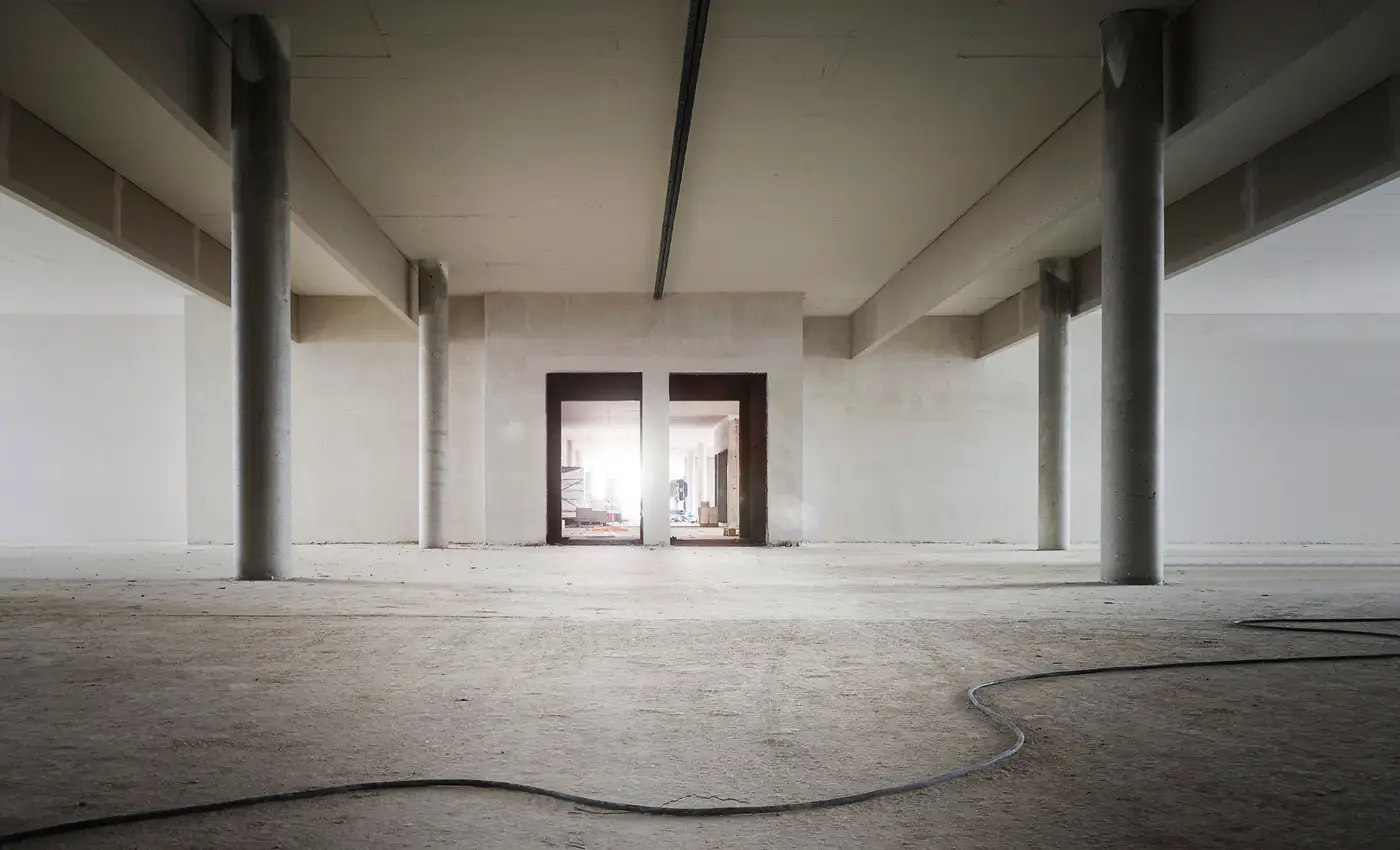
If you've ever tracked a lease signing and then watched the opening date slide four more times, the vanilla box is usually where the slippage starts. It's the single biggest variable in a retail buildout timeline, and most of the people watching from outside the deal, suppliers, analysts, competing operators, never see it happen.
What a vanilla box is
A vanilla box is the condition a landlord delivers a space in once their base building work is done but before the tenant's buildout starts. Concrete floor, drywall to a certain height, a stubbed-in restroom, HVAC roughed in, maybe a storefront. The space sits partway between raw structure and a working store: the landlord has stopped spending, and the tenant's general contractor is about to start.
The term gets used loosely in leasing conversations, so the exact scope varies by landlord and by market. Some vanilla boxes include a finished storefront and demising walls. Others stop at a slab and a sprinkler stub. What matters for anyone tracking an opening date is that "vanilla box delivered" is a milestone, not a finish line. The tenant's own buildout, flooring, fixtures, kitchen equipment if it's a restaurant, millwork, signage, POS wiring, starts only after that handoff, and that buildout is where most of the calendar risk lives.
Cold dark shell vs vanilla box
Upstream of the vanilla box is the cold dark shell: structure, roof, and envelope, with no interior systems run at all. No HVAC, no electrical distribution, no finished floors. A landlord delivering cold dark shell is handing the tenant, or their contractor, a much bigger scope of work, because now someone has to run the building systems before any vanilla-box-level finish work can even start.
The gap between the two deliveries shows up directly in the schedule. A tenant stepping into a vanilla box with code-compliant electrical and HVAC already roughed in can often hit a storefront install and fixture delivery within a few months. A tenant taking cold dark shell is looking at a full build sequence, MEP rough-in, inspections, then finishes, that can run considerably longer. If you're trying to estimate an opening date from the outside, knowing which condition a site was delivered in changes your estimate by months, not weeks.
Why this resets the opening timeline
Here's the part that trips up anyone building an opening calendar from public sources. A permit filing or a lease announcement tells you a deal happened. It tells you almost nothing about what condition the space was in when the tenant took possession, which means it tells you almost nothing about how long the buildout will take.
Two locations can file permits the same week and open four months apart, purely because one was a vanilla box and the other was cold dark shell with asbestos abatement thrown in. Franchise development managers juggling a dozen sites across different landlords run into this constantly: the corporate opening calendar built off lease dates and permit dates is really a calendar of best-case assumptions, and the vanilla box condition is one of the biggest unknowns sitting underneath it.
This is exactly why watching permit boards and press releases site-by-site is a losing game for anyone trying to call an opening date ahead of the public announcement. The documents don't capture buildout condition, and buildout condition is most of the variance.
Signals that the buildout is underway
The physical site tells you more than the paperwork does. Fit-out crews and trade vehicles parked outside on a regular cadence, fresh parking lot striping going in, a new sign frame or channel letters going up on the storefront, these are the visible signals that a tenant has moved past permitting and into the part of the buildout that determines the open date. A site that's been sitting as a bare vanilla box with no activity for months is telling you something different than a site where striping crews showed up last week and a sign permit followed two weeks later.
That's the gap Store Opening Signals is built to close: a monthly read on fit-out traffic, lot striping, and new signage at the sites you're tracking, turned into a per-site readiness flag so you're not guessing which vanilla boxes have started moving toward an open date.
If you're building an opening calendar across more than a handful of sites, it's worth seeing what that monthly flag looks like for your own list.